Méfiez-vous des escroqueries et pièges en ligne modernes
Publié le 26 avril 2026
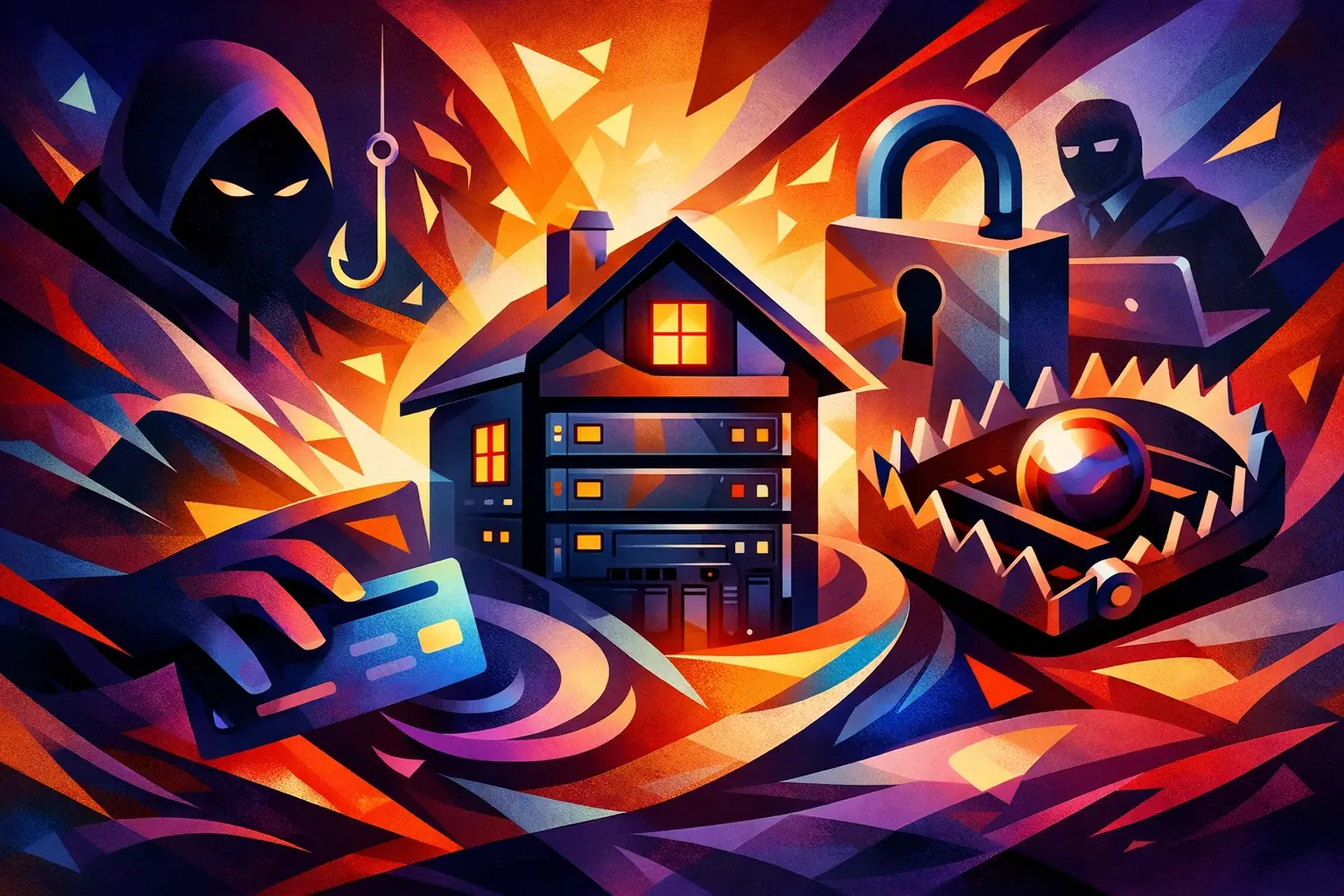
Une fausse facture. Une page de connexion qui semble presque correcte. Un e-mail de support envoyé à 13 h 2. vous demandant de confirmer le mot de passe de votre serveur avant une "interruption de service". Pour les petites entreprises et les opérateurs en ligne, se méfier des escroqueries et pièges en ligne modernes n'est plus un conseil de sécurité général - cela fait partie des opérations quotidiennes.
La partie inconfortable est que la plupart des escroqueries n'ont plus l'air bâclées. Elles ont l'air organisées, urgentes et crédibles. Elles empruntent le langage des fournisseurs d'hébergement, des processeurs de paiement, des registrars de domaines, des sociétés de livraison et même de vos collègues. Si vous gérez une boutique, des sites clients, déployez des applications ou gérez l'infrastructure pour des clients, un mauvais clic peut entraîner le vol d'identifiants, la perte de domaine, un rançongiciel ou un compromis silencieux qui reste indétecté pendant des semaines.
Ce n'est pas seulement un problème de consommateur. C'est un problème de disponibilité, un problème de confiance de marque et un problème de revenus.
Pourquoi les escroqueries en ligne modernes fonctionnent si bien
Les anciennes escroqueries reposaient sur des erreurs évidentes. Les fautes de grammaire, les pièces jointes suspectes et les messages aléatoires d'inconnus les rendaient plus faciles à ignorer. Les escroqueries modernes sont plus efficaces car elles ciblent les flux de travail réels.
Les attaquants comprennent le fonctionnement des entreprises. Ils savent que vous recevez des factures, des demandes de réinitialisation de mot de passe, des avis de renouvellement de domaine et des alertes de support. Ils savent que les agences gèrent plusieurs environnements clients. Ils savent que les équipes SaaS évoluent rapidement et délèguent souvent l'accès. Ils savent que les propriétaires de boutiques paniquent lorsqu'ils voient des termes comme problème de paiement, SSL expiré ou pic de trafic.
C'est pourquoi les bonnes escroqueries commencent rarement par une menace dramatique. Beaucoup commencent par quelque chose de routinier. Un message vous demande de vérifier une mise à jour de facturation. Une invite de connexion apparaît après un faux délai d'attente. Un appelant prétend vous aider à résoudre un problème de sécurité. L'astuce n'est pas toujours une brillance technique. Souvent, c'est le timing, la pression et l'imitation.
Méfiez-vous des escroqueries et pièges en ligne modernes dans l'hébergement et l'infrastructure
Si votre entreprise dépend de serveurs, de domaines, de tableaux de bord et d'abonnements récurrents, certains modèles d'escroquerie sont plus importants que d'autres.
Le premier est le vol d'identifiants via de faux panneaux de contrôle et portails de support. Un attaquant copie l'apparence d'une page de connexion d'hébergement, envoie une alerte crédible et attend que quelqu'un saisisse ses identifiants. Une fois à l'intérieur, ils peuvent ne pas causer de dommages immédiats. Ils peuvent ajouter des clés SSH, créer des utilisateurs, modifier les enregistrements DNS ou exfiltrer des données discrètement. Ce délai rend le repérage de l'escroquerie plus difficile.
Le second est la fraude de domaine et DNS. Un faux avis de renouvellement peut pousser un membre d'équipe occupé à "résoudre" un problème qui n'existe pas. Dans les cas plus graves, un attaquant obtient l'accès au compte du registrar et modifie les serveurs de noms ou les enregistrements MX. Cela peut détourner les e-mails, perturber les sites web et ouvrir la porte à une usurpation d'identité plus large. Perdre le contrôle d'un domaine, même brièvement, peut être plus dommageable que de perdre l'accès à un seul serveur.
Le troisième est la redirection de factures et de paiements. Les agences, les opérateurs e-commerce et les équipes en croissance y sont particulièrement exposés car les finances, les opérations et le personnel technique travaillent souvent en parallèle. Un simple e-mail de paiement usurpé avec des coordonnées bancaires modifiées peut détourner une facture légitime. Contrairement à une tentative de connexion échouée, ce type de fraude peut ne déclencher aucune alerte système.
Il y a aussi l'interaction de support frauduleuse. Quelqu'un prétend être de votre fournisseur et demande des détails de vérification, des codes à usage unique, un accès root ou des informations de sauvegarde. Les vrais fournisseurs doivent parfois vérifier l'identité, mais les processus de support fiables ne reposent pas sur la panique et l'improvisation. La pression est le signe révélateur.
Les signaux d'alerte qui importent le plus
Toutes les escroqueries ne contiennent pas d'erreurs évidentes, donc rechercher un seul signe d'alerte universel ne fonctionne pas bien. Ce qui fonctionne, c'est de vérifier si la requête correspond au comportement opérationnel normal.
Commencez par l'urgence. Si un message exige une action immédiate pour éviter la suspension, la perte de données ou la fermeture de compte, ralentissez. Les vrais problèmes peuvent être urgents, mais les fournisseurs légitimes ont aussi des processus. Ils ne forcent généralement pas les actions majeures sur le compte par un seul e-mail et un compte à rebours.
Ensuite, examinez le chemin suggéré. Vous demande-t-on de vous connecter via un lien que vous n'attendiez pas ? Êtes-vous incité à vérifier la propriété en partageant des identifiants au lieu d'utiliser les contrôles de compte déjà à votre disposition ? Les détails de paiement changent-ils en dehors du canal de facturation habituel ? Ce sont des décalages de processus, et les décalages de processus sont là où de nombreuses escroqueries se révèlent.
Considérez ensuite le contexte. Cette requête a-t-elle été envoyée à la bonne personne ? Utilise-t-elle le même schéma d'expéditeur, la même méthode de facturation ou le même flux de tickets que votre équipe voit normalement ? Un message techniquement soigné peut toujours être faux s'il bafoue votre modèle opérationnel normal.
Comment les entreprises se font piéger même lorsque le personnel est prudent
La plupart des équipes ne sont pas compromises parce qu'elles sont négligentes. Elles sont compromises parce que l'environnement est chargé.
Un développeur déploie une correction tout en répondant aux messages de support. Un propriétaire de boutique gère les rétrofacturations et les problèmes avec les fournisseurs. Un gestionnaire de compte d'agence reçoit un message de domaine et le transfère à la mauvaise personne sans le vérifier. Quelqu'un travaille depuis son téléphone, parcourt rapidement un e-mail et manque une subtile faute de frappe dans le nom de domaine. Une autre personne suppose qu'un collègue a déjà vérifié la demande.
Les escroqueries réussissent dans ces failles. Pas seulement des failles techniques, mais opérationnelles.
C'est pourquoi la sensibilisation à la sécurité seule ne suffit pas. Vous avez également besoin de friction aux bons endroits. Les actions critiques devraient nécessiter une confirmation. L'accès devrait être limité par le rôle. Les sauvegardes devraient être automatiques, pas par souhait. La surveillance devrait signaler les changements avant que les clients ne les signalent. De bonnes opérations réduisent les dommages qu'une escroquerie peut causer, même lorsque quelqu'un fait une erreur.
Défenses pratiques qui réduisent réellement le risque
L'approche la plus sûre n'est pas la paranoïa. C'est un processus prévisible.
Utilisez des mots de passe forts et uniques et stockez-les dans un gestionnaire de mots de passe. C'est un conseil de base, mais il est toujours important car les mots de passe réutilisés transforment un service compromis en une réaction en chaîne. Ajoutez l'authentification multifacteur partout où elle est disponible, en particulier pour les portails d'hébergement, les registrars, la messagerie électronique et les systèmes de facturation. La messagerie électronique mérite une attention particulière car une fois qu'elle est compromise, les attaquants peuvent souvent réinitialiser l'accès ailleurs.
Séparez les tâches lorsque c'est possible. La personne qui approuve les factures ne devrait pas se fier uniquement à un e-mail de modification de compte bancaire. La personne qui gère le DNS ne devrait pas partager sans précaution les identifiants complets du registrar via un chat d'équipe. Si vous gérez des environnements clients, isolez les comptes et les autorisations afin qu'une seule erreur n'expose pas tous les clients.
Gardez un inventaire clair de vos services critiques. Cela signifie savoir où vos domaines sont enregistrés, où le DNS est hébergé, qui contrôle les renouvellements SSL, où vivent les sauvegardes et quels comptes détiennent l'autorité administrative. Lorsque les équipes ne savent pas ce qu'elles possèdent, les escroqueries deviennent plus faciles à organiser car personne ne peut vérifier rapidement ce qui est légitime.
La vérification doit avoir lieu en dehors du message qui a déclenché la requête. Si vous recevez une alerte de facturation, vérifiez en vous connectant via votre chemin enregistré habituel. Si le support vous contacte au sujet de quelque chose de sensible, vérifiez par le canal de support existant que vous faites déjà confiance. Si une destination de paiement change, confirmez-la par une méthode de contact connue, pas par le bouton de réponse.
Pourquoi les sauvegardes et la surveillance sont importantes dans le rétablissement après une escroquerie
Prévenir les escroqueries n'est que la moitié du travail. Le rétablissement est ce qui empêche un événement de sécurité de devenir une crise d'entreprise.
Si des identifiants sont volés et des fichiers modifiés, des sauvegardes propres peuvent sauver des jours de travail de reconstruction. Mais toutes les sauvegardes ne se valent pas. Si elles sont mal stockées, non testées ou accessibles avec le même compte compromis, elles peuvent échouer lorsque vous en avez le plus besoin. Les entreprises pensent souvent qu'elles ont une couverture de sauvegarde jusqu'à ce que la restauration devienne urgente.
La surveillance est importante pour la même raison. Une violation liée à une escroquerie ne s'annonce pas toujours. Parfois, le premier signe est une activité CPU inhabituelle, des problèmes de livraison de courrier, des modifications DNS non autorisées ou des actions d'administrateur à des heures étranges. Une visibilité précoce vous donne un désordre plus petit à réparer.
C'est une des raisons pour lesquelles le support d'infrastructure géré n'est pas seulement une fonctionnalité pratique. Pour de nombreuses entreprises, c'est une couche de contrôle des risques. Lorsque des techniciens expérimentés surveillent l'environnement, aident aux sauvegardes et réagissent rapidement aux changements suspects, le coût d'une escroquerie peut chuter considérablement. Ce type de reassurance opérationnelle est exactement la raison pour laquelle certains clients choisissent un fournisseur comme kodu.cloud au lieu de gérer eux-mêmes toutes les préoccupations liées aux serveurs.
Une règle simple pour les messages sous haute pression
Lorsqu'un message crée la panique, n'agissez pas sous le coup de la panique.
Faites une pause. Vérifiez. Utilisez les systèmes et contacts auxquels vous faites déjà confiance. Si le problème est réel, un court délai passé à le confirmer ne créera pas le désastre que le message d'escroquerie promet. Si le problème est faux, cette pause peut sauver votre domaine, votre accès serveur, votre compte de facturation ou vos données clients.
Les escroqueries en ligne modernes sont conçues pour exploiter la vitesse, la routine et l'attention divisée. Votre meilleure défense est un modèle opérationnel calme : accès contrôlé, flux de travail vérifiés, systèmes surveillés et sauvegardes sur lesquelles vous pouvez compter. L'objectif n'est pas de devenir méfiant de tout. C'est de s'assurer qu'un message convaincant ne puisse pas anéantir le travail que vous avez mis des années à construire.
Andres Saar, Ingénieur du support client